Car Body Damage repair in Dubai: Dents, Bumpers and Collision Fixes
After you submit the form, a representative will call you back with the information you’ll need to make an appointment.
Describe Your Symptom
Send a quick message with what your car is doing — we’ll come back with the likely cause and a fixed-price quote.
Phone
Address
Warehouse #6, 12 Street 20A, Al Quoz Industrial Area 3, Dubai, UAE
After a collision or parking mishap, car body damage repair is one of the first things drivers search for — and one of the most misunderstood. Whether you need paintless dent repair for a minor ding or a full car bumper repair after a rear-end collision, choosing the wrong fix can cost you twice. This guide walks you through every major type of auto body damage, helps you understand what a professional assessment actually involves, and shows you when a quick DIY solution is acceptable — and when it absolutely isn’t.
How Professionals Assess Car Body Damage After a Collision
A proper collision repair assessment goes far beyond what you can see on the surface. Technicians use frame measuring systems, ultrasound thickness gauges, and UV leak detectors to identify damage that is invisible to the naked eye. A bumper that looks intact may have a cracked inner foam absorber. A door that opens and closes smoothly may have a bent frame rail behind the panel. Skipping a professional inspection after even a low-speed impact can result in hidden structural weakness that affects vehicle safety in future crashes. During the diagnostic process, the technician will classify damage into three tiers: cosmetic (paint, minor scratches), structural (frame, pillars, rails), and mechanical (suspension geometry, sensors, airbag modules). The repair path and cost estimate depend entirely on which tier — or combination of tiers — is involved. Always request a written diagnostic report before authorizing any work.
Paintless Dent Repair: When It Works and When It Doesn’t
Paintless dent repair (PDR) is the most cost-effective method for removing dents from car body panels — but only under specific conditions. PDR works when the paint surface is unbroken, the dent has no sharp creases, and the metal hasn’t been stretched beyond its elastic limit. A skilled technician uses rods and reflection boards to massage the metal back to its original shape from behind the panel, without any filler or repainting. PDR is ideal for hail damage, door dings from parking lots, and shallow round dents on flat panel sections. It is not suitable for dents on high-strength steel or aluminum panels near body lines, dents with paint cracking, or any damage that has deformed the panel edge. In those cases, conventional body filler and paint refinishing are necessary. Attempting PDR on unsuitable damage often makes the repair more expensive afterward.
Car Dent Removal Cost: What Affects the Price
The cost of car dent removal varies widely depending on panel location, dent size, and material. A single small ding on a steel door via PDR typically ranges from $75 to $150. The same dent on an aluminum hood — which requires specialized low-force tools — can cost two to three times more. Dents that require panel replacement instead of repair jump significantly in price once paint matching and blending are factored in. Always get three quotes and confirm whether the price includes color blending on adjacent panels.
Car Bumper Repair vs. Bumper Replacement
Not every damaged bumper needs to be replaced. Car bumper repair is viable when the bumper cover has cracks shorter than 6 inches, surface scuffs, or minor warping that hasn’t compromised the mounting tabs. A technician can weld plastic cracks from behind, reshape the cover with a heat gun, and repaint to factory match — often for 40–60% less than replacement. Replacement becomes necessary when the bumper cover is shattered, the inner reinforcement bar is bent, or the energy absorber foam is crushed. Modern bumpers house parking sensors, radar modules, and cameras — so even a cosmetically repaired bumper may require sensor recalibration after the work is done. Always ask your shop whether post-repair ADAS calibration is included in the quote.
Car Scratch Repair: Surface vs. Deep Paint Damage
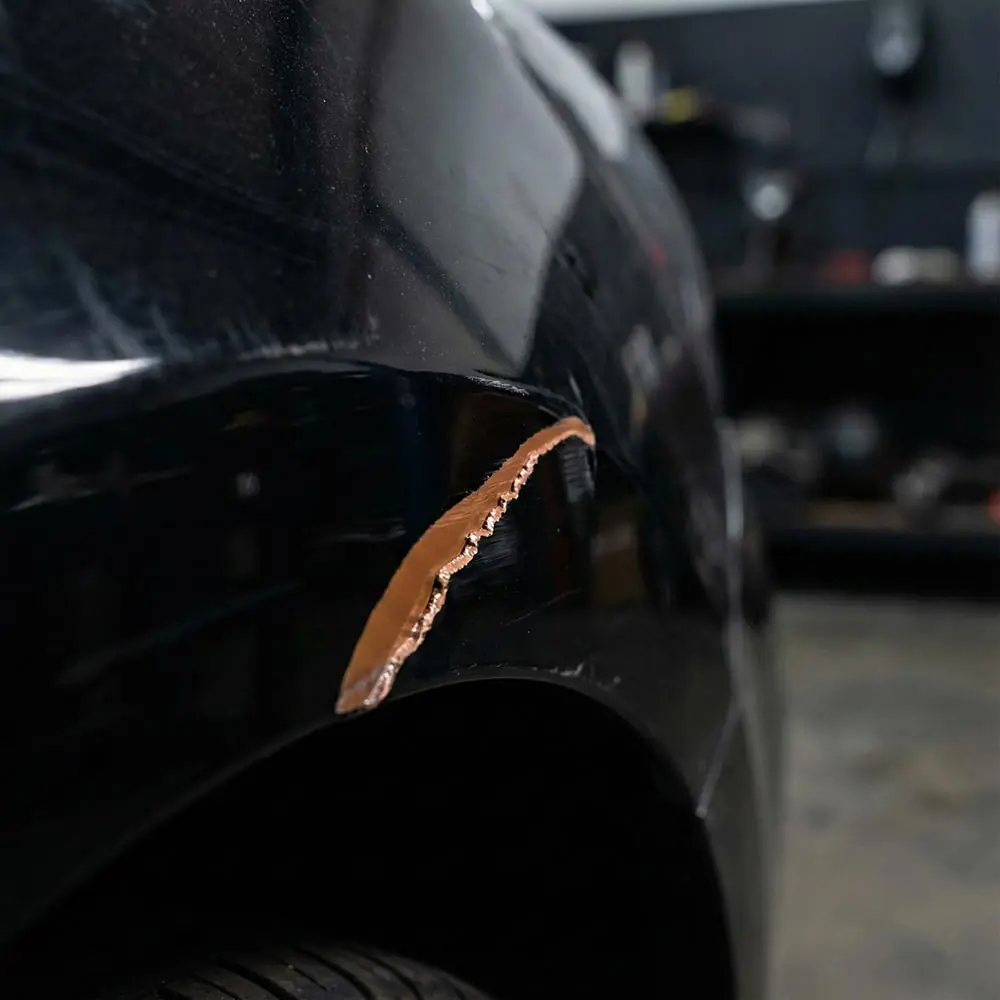
Not all scratches are equal. A car scratch repair strategy depends on which layer is affected. Clear coat scratches (catch a fingernail slightly) can be polished out with a compound and machine polisher. Base coat scratches (you see color on a white cloth) require touch-up paint and clear. Primer-deep scratches (bare metal visible) need full repaint of the panel to prevent rust. Attempting to polish a primer-deep scratch only removes more clear coat and makes the eventual repair larger and more expensive.
Auto Body Repair and Insurance: What You Need to Know
If the damage resulted from a collision, your auto body repair may be covered under collision insurance. Most insurers require a written estimate from a licensed body shop before approving the claim. Some policies allow you to choose any certified shop; others direct you to a preferred network. Key point: you are legally entitled to OEM (original manufacturer) parts in many states, even if the insurer quotes aftermarket parts in the initial estimate. Ask specifically whether the repair uses OEM or non-OEM components, as this affects both fit quality and resale value.
Frequently Asked Questions
If the paint surface is intact, the dent has no sharp creases, and the metal hasn’t been stretched, paintless dent repair is likely suitable. If the paint is cracked, the panel edge is deformed, or the material is high-strength steel or aluminum near a body line, conventional repair with filler and repainting is required. A professional PDR technician can assess suitability in minutes.
Yes, in most cases bumper repair costs 40–60% less than full replacement. Repair is viable for cracks under 6 inches, scuffs, and minor warping. However, if the inner reinforcement bar or sensor mounts are damaged, replacement is the safer and more cost-effective long-term choice.
It depends on what was damaged. Cosmetic dents and scratches don’t affect drivability. However, even a low-speed collision can misalign suspension geometry, damage radar sensors, or crack a coolant line — none of which are visible externally. A professional inspection is always recommended before resuming normal driving after any impact.
Professional dent removal, especially PDR that leaves the original paint intact, can maintain or improve resale value. Unrepaired dents, on the other hand, signal neglect and reduce buyer confidence. A clean CarFax report combined with well-executed bodywork typically yields a higher private-sale price than visible unrepaired damage. CONTACT US