Car Performance Loss Repair in Dubai – Engine Power Loss & Acceleration Diagnosis
After you submit the form, a representative will call you back with the information you’ll need to make an appointment.
Describe Your Symptom
Send a quick message with what your car is doing — we’ll come back with the likely cause and a fixed-price quote.
Phone
Address
Warehouse #6, 12 Street 20A, Al Quoz Industrial Area 3, Dubai, UAE
If your car feels slower than usual, struggles to accelerate, hesitates under load, or responds late when you press the throttle, the issue should not be ignored. Performance loss is usually a sign that the engine is no longer producing power efficiently, or that the power is not being delivered smoothly. In many cases, the problem starts gradually: the vehicle may feel normal during short trips, then become sluggish in traffic, at highway speeds, or during overtaking. At Hallmark Auto Service, we diagnose car performance loss in Dubai , including engine power loss , poor acceleration , delayed throttle response , reduced engine power , and engine hesitation . Proper diagnosis starts with checking the complete system, not just one component. Performance issues may be linked to airflow restriction, fuel delivery imbalance, carbon buildup, turbo boost loss, overheating, ignition faults, sensor inaccuracy, exhaust restriction, or transmission-related drag.
Why Cars Lose Performance
Modern engines rely on a precise balance of air, fuel, spark, temperature control, boost pressure, and electronic inputs. When one part of that system becomes weak or inaccurate, the car may lose acceleration, feel heavy, or enter a reduced-power condition. In Dubai, heat and traffic can make these issues more noticeable because thermal load increases stress on the engine, intake, cooling, and turbo systems. Common causes of performance loss include:
- Restricted airflow from a dirty air filter or intake contamination
- Throttle body deposits or throttle control faults
- Carbon buildup on intake valves
- Dirty or weak fuel injectors
- Fuel pump or fuel pressure problems
- Worn spark plugs or failing ignition coils
- Turbocharger inefficiency or boost leaks
- Faulty MAF, MAP, oxygen, or temperature sensors
- Cooling system inefficiency or heat soak
- Blocked catalytic converter or exhaust restriction
- Transmission faults affecting power delivery
- ECU protection strategies or limp mode activation
Common Symptoms of Engine Power Loss
Performance loss does not always feel the same. Some vehicles show weak acceleration from a stop, while others feel normal at low speed and lose power only under heavy load, uphill driving, or after reaching operating temperature. Typical warning signs include:
- Slow or weak acceleration
- Delayed throttle response
- Engine hesitation during take-off
- Reduced power at higher speeds
- Turbo lag or lack of boost
- Rough running under load
- Increased fuel consumption
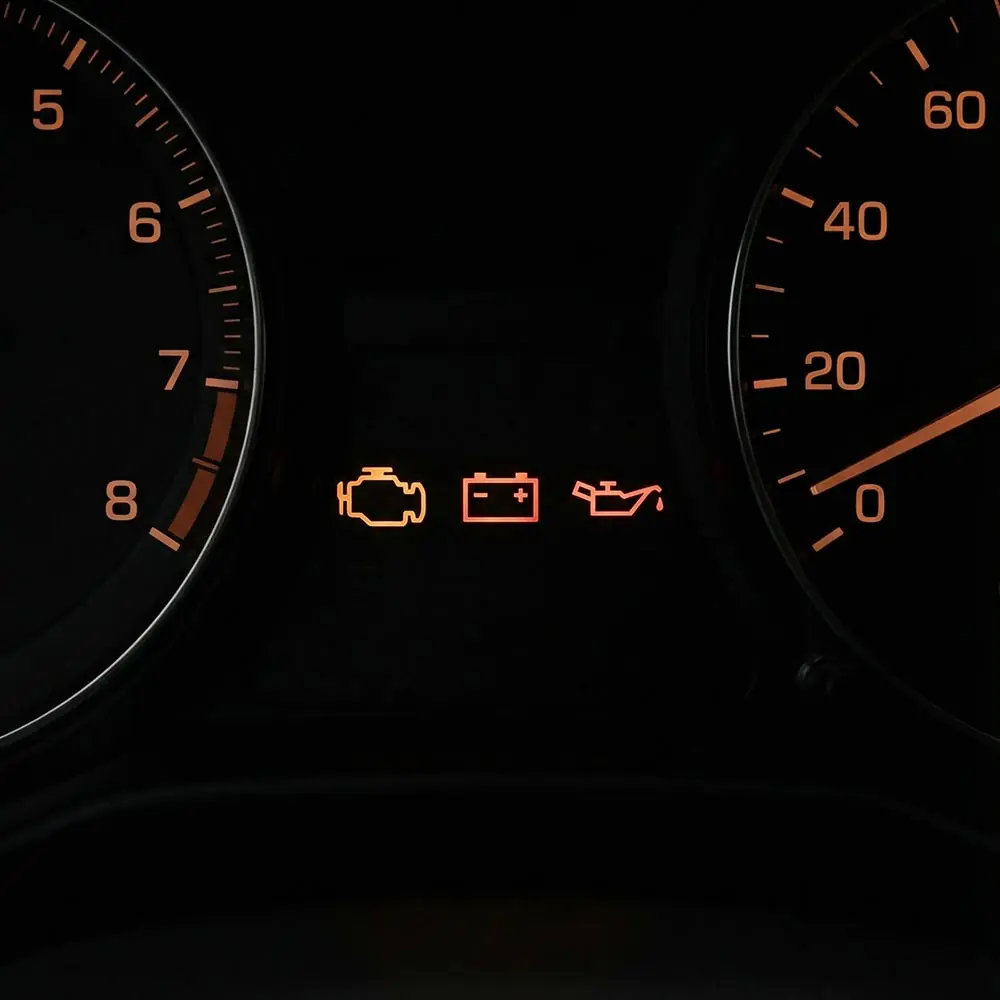
- Check engine light or reduced engine power message
- Misfires, jerking, or unstable engine behavior
- Vehicle feels heavy in hot weather or traffic
What Causes Poor Acceleration in Dubai
Dubai conditions can amplify small engine efficiency problems. Heat affects intake air temperature, cooling efficiency, and sensor behavior. Stop-and-go traffic increases thermal stress, while repeated short trips and urban driving can contribute to intake contamination and carbon deposits. A car may feel acceptable when cold, then lose responsiveness after temperature builds up. This is why poor acceleration repair in Dubai should always include more than a basic fault code scan. The real issue may be mechanical, thermal, electronic, fuel-related, or a combination of several smaller faults.
What We Check During Performance Loss Diagnosis
Proper diagnosis focuses on identifying where power is being lost and why. At Hallmark Auto Service, we inspect the engine as a full operating system rather than guessing based on one symptom. Our performance loss diagnostic process may include:
- Air intake and boost system analysis
- Fuel delivery and injector performance evaluation
- Throttle body and throttle response inspection
- Ignition system testing
- Turbocharger and boost leak checks
- Thermal efficiency and cooling system checks
- Sensor data analysis for MAF, MAP, O2, and temperature readings
- Exhaust flow and catalytic restriction assessment
- Live data review under load when required
- Transmission behavior review if power delivery feels inconsistent
Airflow and Intake Problems
Engines need a stable supply of clean, measured air. If the intake path is restricted or the airflow reading is inaccurate, the engine may produce less power than expected. Dirty air filters, intake leaks, carbon deposits, throttle body contamination, and airflow sensor issues can all reduce responsiveness and cause sluggish acceleration.
Fuel Delivery Problems
Fuel-related performance loss can come from weak fuel pressure, clogged injectors, poor spray pattern, inconsistent fuel delivery, or combustion imbalance. These issues can make the car hesitate, misfire under load, or feel flat during acceleration. Drivers often describe this as the engine “not pulling properly” or “taking too long to build speed.”
Turbo and Boost-Related Performance Loss
On turbocharged vehicles, power loss may be linked to boost leaks, wastegate issues, worn turbo components, boost control faults, or charge-air system leaks. A turbo car with reduced boost often feels lazy, delayed, or noticeably weaker during overtaking and highway acceleration.
Heat-Related Efficiency Loss
A vehicle can also lose performance when operating temperature rises beyond normal efficiency. Heat-soaked sensors, cooling system weakness, poor intercooling, radiator inefficiency, and elevated intake temperatures can all reduce engine response. In Dubai, thermal problems are especially important because they can make the vehicle feel normal during short operation and noticeably weaker during longer driving.
Exhaust Restriction and Engine Load
If exhaust gases cannot exit efficiently, the engine has to work harder and may feel restricted. A blocked catalytic converter or exhaust flow problem can reduce acceleration, increase fuel consumption, and create a heavy, strained engine feel. This type of fault is often overlooked when the main complaint is simply “the car has lost power.”
Transmission and Drivability Issues
Sometimes the engine is producing power, but the vehicle still feels slow because the transmission is not transferring that power correctly. Delayed gear changes, slipping, incorrect shift logic, or drivetrain drag can create symptoms that feel like engine weakness. That is why performance loss diagnosis should also consider transmission behavior where necessary.
How Performance Loss Problems Are Fixed
The correct repair depends on the root cause. Some vehicles need intake cleaning, injector service, spark plug replacement, ignition coil replacement, turbo hose repair, boost leak correction, sensor replacement, throttle cleaning, fuel system repair, cooling system work, or catalytic converter diagnosis. In other cases, the problem may require deeper engine or transmission troubleshooting. Proper engine power loss repair in Dubai is not about clearing faults and hoping the car improves. It is about confirming the exact reason the vehicle is underperforming and restoring normal power delivery, throttle response, and driving confidence.
Why You Should Not Ignore Performance Loss
A car that feels slow or inconsistent is often warning you that efficiency is already compromised. Ignoring the issue can increase fuel consumption, add stress to the engine and transmission, worsen overheating risk, and allow minor faults to develop into larger repairs. Early diagnosis is usually faster, safer, and more cost-effective than waiting until the vehicle enters limp mode or develops misfires, warning lights, or overheating symptoms.
Why Choose Hallmark Auto Service for Performance Loss Repair in Dubai
Hallmark Auto Service provides structured diagnostics for vehicles that suffer from performance loss , poor acceleration , reduced engine power , and throttle response issues . We focus on accurate fault isolation, proper testing, and repair planning based on how the vehicle behaves in real conditions. Whether the issue comes from airflow, fuel delivery, turbo boost, overheating, sensors, ignition, or transmission behavior, the goal is the same: restore smooth, reliable, and predictable performance.
Frequently Asked Questions
Sluggish acceleration can be caused by restricted airflow, fuel delivery issues, carbon buildup, ignition faults, turbo boost leaks, overheating, sensor errors, exhaust restriction, or transmission-related problems.
Reduced engine power usually means the engine control system has detected a fault and is limiting performance to protect the vehicle. The cause may be linked to the engine, turbo system, sensors, fuel system, or overheating.
Yes. High temperatures can increase intake air temperature, reduce thermal efficiency, stress the cooling system, affect boost performance, and make existing faults more noticeable, especially in traffic and under load.
Yes. A restricted air filter, intake contamination, or carbon buildup can reduce airflow efficiency and affect combustion, which may lead to weak acceleration and slower throttle response.
Correct diagnosis usually includes checking airflow, boost pressure, fuel delivery, ignition performance, sensor readings, engine temperature behavior, exhaust restriction, and when necessary, transmission operation under real driving load.